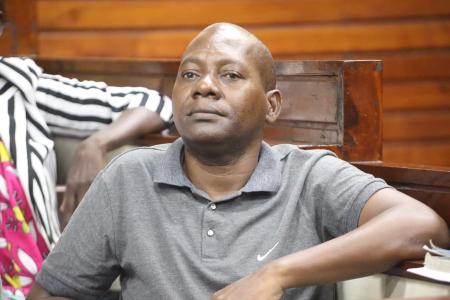
A Mombasa court on Wednesday ruled that Pastor Paul Mackenzie and 30 co-accused have a case to answer in the Shakahola murder trial involving 191 counts of murder.
The court said prosecution evidence, including 121 witnesses and forensic reports, established a prima facie case, placing the accused on their defence in one of Kenya’s most serious mass death cases.
The ruling marks a major turning point in a case that has drawn national and international attention since the discovery of mass graves and human remains in Shakahola Forest in Kilifi County in 2023.
The area became the focus of a large-scale police operation after reports emerged of followers of a controversial religious sect allegedly dying from starvation and neglect under the influence of a cult-like movement.
Delivering the ruling, Justice Diana Kavedza found that the prosecution had established a prima facie case against all the accused persons, meaning they must now be placed on their defence.
“A win for the DPP as the court finds Mackenzie and 30 others with a case to answer in the Shakahola murder case,” the Office of the Director of Public Prosecutions said.
The prosecution told the court it had presented a substantial body of evidence in support of its case, including testimony from 121 witnesses.
These included survivors of the alleged cult, investigating officers, and expert witnesses, alongside forensic and documentary exhibits.
“The prosecution called 121 witnesses in support of its case, including survivors, expert witnesses, and investigating officers, as well as presenting exhibits that included postmortem reports and government analyst findings, amongst others,” the ODPP said.
Justice Kavedza noted in her ruling that several key facts were not in dispute, including the exhumation of bodies and identification of remains that were later released to relatives for burial.
“Based on the totality of materials placed before her, it is not in dispute that bodies of children were exhumed at Shakahola, some of the remains were identified and released to the relatives for burial,” she stated.
The court also heard that multiple witnesses had testified linking some of the accused persons to the scene of the alleged crimes.
They described individuals taking up roles within the settlement, including as guards, cooks, grave diggers, and village elders.
“Some witnesses placed some of the accused persons at or within the scene of the crimes and described them as village elders, guards, grave diggers, cooks, and others performing different roles within the settlement,” the ruling noted.
The defence team informed the court that it would present its case through sworn testimony and call 12 witnesses, including six expert witnesses, alongside the accused persons themselves.
The accused, including Pastor Paul Mackenzie, also referred to as “Mtumishi” and “Nabii”, were charged with 191 counts of murder under Section 203 read with Section 204 of the Penal Code.
One of the accused, Enos Amanya, had already pleaded guilty and is awaiting sentencing.
The ruling now places the remaining 30 accused on their defence, setting the stage for what is expected to be a lengthy and closely watched trial.
The Shakahola case has been widely regarded as one of Kenya’s most significant criminal prosecutions in recent years, raising questions about religious extremism, failure of early warning systems, and the protection of vulnerable followers.
Authorities exhumed hundreds of bodies during investigations in 2023, with children among the victims, triggering national outrage and calls for stronger regulation of religious organisations.
Senior prosecution officials handling the case include Deputy Director of Public Prosecutions Joseph Kimanthi and Jami Yamina, alongside Assistant Director Ngina Mutua, Principal Prosecution Counsels Victor Owiti, Betty Rubia, Alex Ndiema, and Prosecution Counsel Yassir Mohamed.
As the trial proceeds to the defence stage, attention now shifts to how the accused will respond to the extensive prosecution evidence and whether the court will ultimately find them guilty or acquit them after full hearing of the case.































Comments
Sign in with Google to comment, reply, and like comments.
Continue with Google